


Lot n° 448
Estimation :
4000 - 6000
EUR
Charles H. DELANGLADE (1870-1952) - Lot 448
Charles H. DELANGLADE (1870-1952)
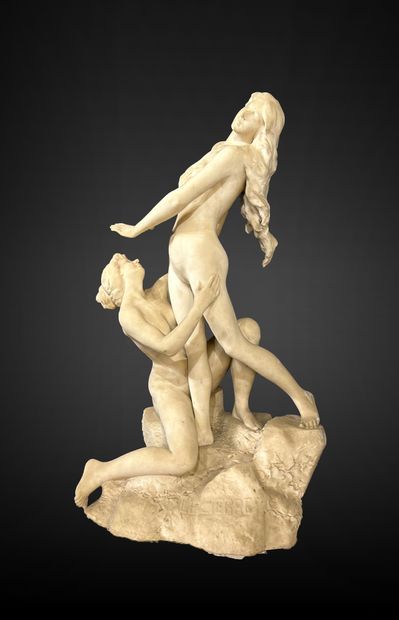
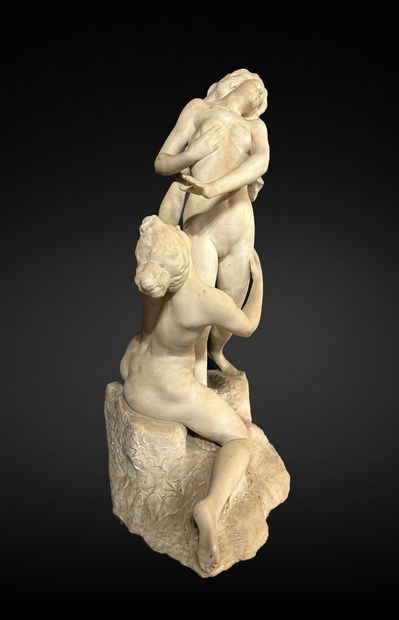
The Ivy
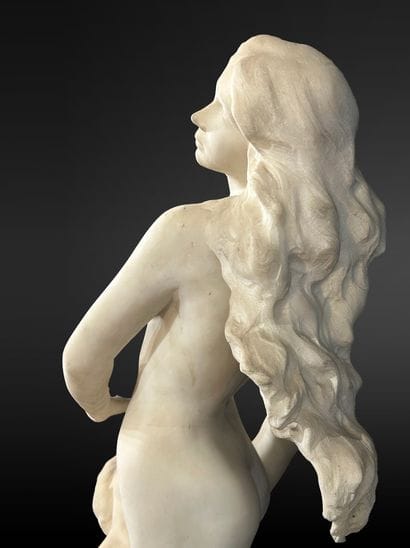
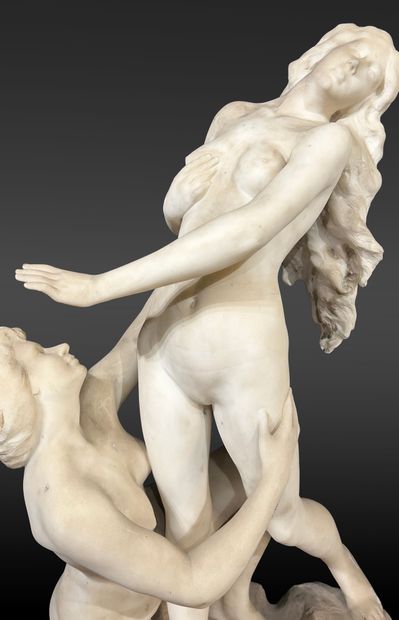
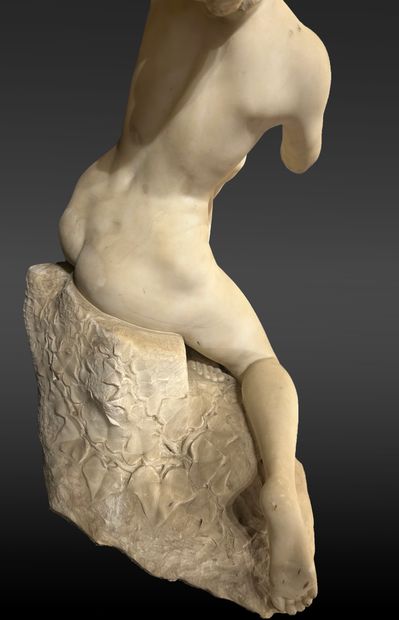
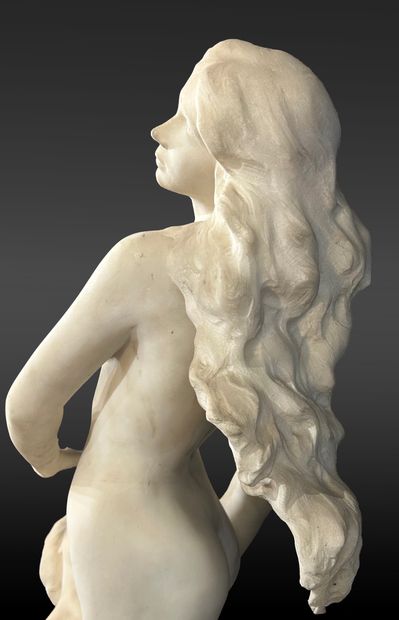
Large white marble sculpture of a kneeling young man holding a young woman standing on a rocky base.
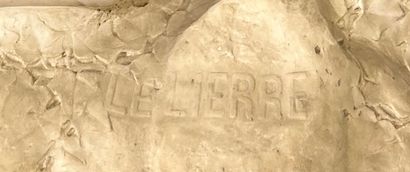
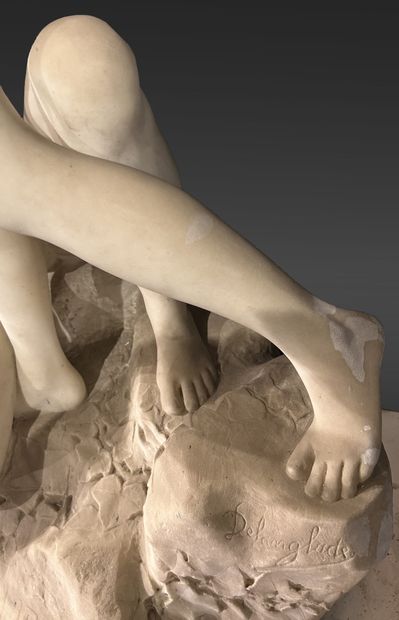
Signed and titled in the marble
H. 109 cm
(No accidents and/or restorations, but the marble needs to be cleaned as the sculpture was outdoors)
Biography :
Delanglade Charles Henri (Marseille, May 26, 1870 - Marseille, January 19, 1952), sculptor, medallist and ceramist.
Pupil of Émile Aldebert (1827-1924) in Marseille, then of Jules Cavelier (1814-1894) and Ernest Barrias (1840-1905) in Paris, he received an academic training. A member of the Salon des Artistes Français in 1909, he received an honorable mention in 1910 for his marble Vers la vie.
However, coming from a wealthy background, he withdrew from the art market and practiced his talents as a dilettante in his home town. Although he worked for his own pleasure and that of his friends, his activity was intense both artistically and intellectually. Although he abandoned the Salon des Artistes Français, he was an active participant in the Salon des artistes marseillais, exhibiting numerous works between 1894 and 1919. He also took part in major exhibitions in Marseille, such as the Colonial Exhibitions of 1906 and 1922, and the Catholic Exhibition of 1935. Recognized and appreciated by Marseille's intelligentsia, he joined numerous learned societies and institutions, including the Comité du Vieux-Marseille, the Comité
Régional des Arts Appliqués de Marseille (1916), the Commission d'inspection et de surveillance du Musée des Beaux-Arts de Marseille and the Académie des Sciences, Lettres et Arts de Marseille (1919-1951).
An excellent portraitist, he produced numerous busts: Léopold Le Mée de la
Salle (1915, Saint-Pierre cemetery, Marseille) Antoine de Ruffi (1916, Archives municipales de Marseille), his brother, physician Édouard Delanglade (circa 1918, formerly Hôtel-Dieu de Marseille) or Eugène Rostand (1921,
Caisse d'épargne; 1936, Edmond Rostand's birthplace, Marseille). He also developed his portraiture skills as a medallist.
One of the hallmarks of his work is the variety of materials he used, and his ability to create a single work in a range of materials:
Antigone (pewter, 1896; marble, 1897), Walkyrie (bronze, 1908; wood, 1908),
Nymph and Faun (ivory)...
My orders
Sale information
Sales conditions
Return to catalogue